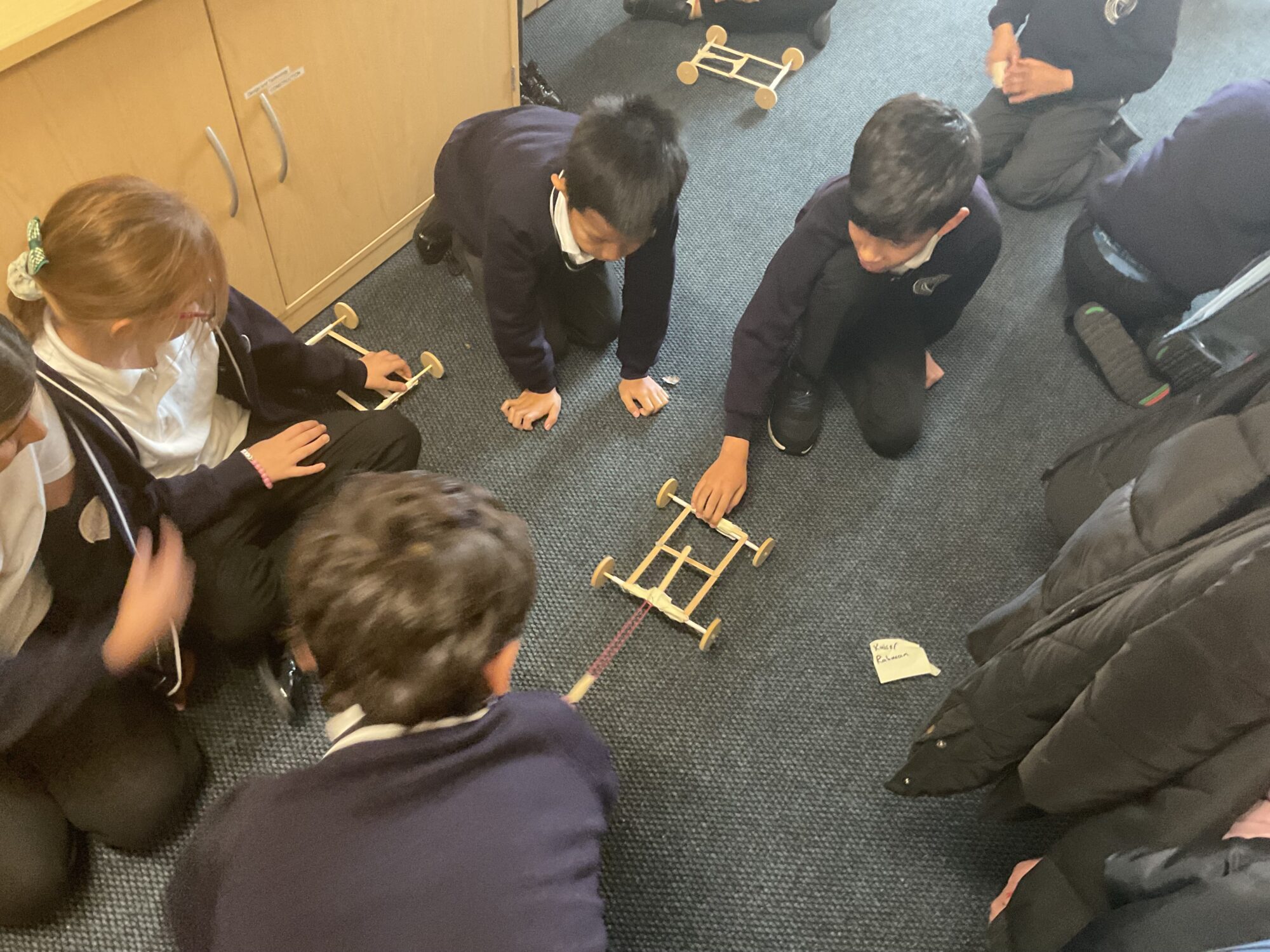
This week we began working on portraits, our module for Autumn 2. It was quite…
Year 5 Autumn Term Class Information
ENGLISH
Greek Myths & Legends
BOOK: Three Heroic Tales Retold by Hugh Lupton
The stories that we shall be focussing on are ‘Demeter & Persephone’ and ‘Orpheus & Eurydice’. By the end of our studies the children will each be expected to be able to:
- write a short dialogue
- write a narrative in the third person, with dialogue
- retell events from the story in the first person from the point of view of a character
- use paragraphs to organise their writing
Contemporary Adventure Novel
BOOK: The Song of The Dolphin Boy by Elizabeth Laird
By the end of our studies the children will each be expected to be able to:
- write a narrative that relates to sea creatures
- describe, inform and persuade their reader through using a voice relevant to the reader
- to write in role, organising ideas into paragraphs
- to move the story on using dialogue while in character
- to write their own story in the third person
POET STUDY – Matt Goodfellow
We shall be learning, interpreting and reciting poems by Matt Goodfellow. Hopefully we shall be performing one of his poems at the Christmas production on Thursday 11th December.
MATHS
The children will be expected to learn and understand these topics:
Number – Place Value
- Roman Numerals
- Numbers to 1,000,000 including comparing, ordering and rounding to the nearest 10, 100 & 1,000
Addition & Subtraction
- Adding and subtracting numbers up to 4-digits
- Adding and subtracting numbers with more than 4 digits
- Rounding and using the inverse to check answers
- Multi-step problems
- Finding missing numbers
Multiplication & Division
- Multiples and common multiples
- Factors and common factors
- Prime, square and cube numbers
- Multiplying and dividing by 10, 100 and 1,000
- Multiples of 10, 100 and 1,000
Fractions
- Recognising equivalent fractions
- Converting between mixed numbers and improper fractions
- Comparing and ordering fractions less than 1
- Comparing and ordering fractions greater than 1
- Adding and subtracting fractions
- Adding and subtracting mixed numbers
SCIENCE
Mixtures & Separation
The children will be expected to understand:
- sieving
- mixing
- solutions
- how factors such as temperature, stirring and particle size affect dissolving
- evaporation as a separation technique
Materials – Properties & Change
- How hardness and transparency can affect the uses of materials
- Materials as electrical or thermal conductors
- Reversible changes
- Irreversible Changes
There is a trip to THINKTANK BIRMINGHAM in early December where the children will attend a workshop that supports and brings to a conclusion their learning over this term.
ART & DESIGN
Architecture
- using observation, printing and architect techniques the children learn to design buildings with a purpose in mind.
- Friedensreich Hundertwasser – understanding this visual artist and ecologist and his vibrant style of architectural design.
- We hope to fit in a visit to a local monument in the area to evaluate it’s intention. This trip is yet to be arranged and will involve NO COST but will take place before the end of term.
Painting & Mixed Media
- how words, backgrounds and position can be used to create effects when drawing
- Chila Kumari Singh Burman – how her creative use of photographs can be used to create portraits
- how other artists use line, colour and pattern to create effects
- using a sketchbook
- creating a final piece
COMPUTING
Computing systems and networks – Systems & Searching
The children will be working towards understanding of:
Understanding Computer Systems
- How computer systems are interconnected parts with inputs, processes, and outputs that communicate with other devices, and recognising their role, benefits, and human elements in our lives.
Exploring Search Engines and Online Information
- Experimenting with and refining web searches to find specific information, describing how search engines select and rank results using web crawlers and indexes, and evaluating the importance, influence, and limitations of search result order.
DESIGN TECHNOLOGY
A stuffed toy
The children will:
- design
- create a template
- cut fabric
- thread a needle
- stitch together fabric
- add decorations
- stuff a toy
Electrical Systems – Doodlers
The children will learn to:
- identify components of a simple circuit
- take apart and reassemble a product to understand how different parts affect it’s function
- affect function by tinkering with a products configuration
- investigate and develop a design to include a motor in an electrical system
GEOGRAPHY
Location, Human & Physical Geography – Deserts
The children will learn:
- where hot deserts are located
- the plants and animals that can be found there
- the largest deserts on each continent
- the origins and features of Death Valley
- examples of how humans use the desert
- how human activity can negatively impact the desert
- environmental threats to the desert.
Place and Locational Knowledge – Why Does Population Change?
The children will learn about:
- global population and how it has changed
- the definition of birth and death rates and how they are influenced
- migration and it’s push and pull factors, reasons for climate change
- how to carry out fieldwork in order to collect qualitative and quantitative data and how to use digital technology to map the data, interpret it and draw conclusions from it.
HISTORY
The Legacy of the Ancient Greek Civilisation
- The location and time of the ancient Greek civilisation
- their beliefs in Gods and Goddesses and Mount Olympus as their home
- Athens and Sparta as two contrasting city-states
- Athenian democracy,who made government decisions
- their contribution to democracy, philosophy, theatre, architecture and sport including it’s profound legacy on Western culture.
British History – Were the Vikings Raiders, Traders or Something Else?
- Explain where the Vikings came from and why they invaded Britain.
- Sequence events according to their significance for groups of people.
- Find evidence and make inferences from sources.
- Name Viking trade routes.
- Explain why trade routes were important to the Vikings.
- Identify the differences between Viking sagas.
- Evaluate the impact of Viking achievements.
SPANISH
Personal Information – My Family
- Use the names for family members in Spanish
- Move to using ‘my’ in Spanish
- Answer the question ‘¿Tienes hermanos?’ (do you have any brothers or sisters?) in Spanish
- Introduce family members in Spanish, using ‘se llama’ (he/she is called)
- Use knowledge of larger numbers in Spanish to be able to describe the age of family members
Food – Ice Creams
- name and recognise up to 10 different flavours for ice creams
- ask for an ice-cream in Spanish using ‘quisiera’,
- state the desired flavour and whether it’s in a cone or a small pot/tub
Music
By Year 5, music education aims to cultivate more sophisticated musicianship, encouraging performance with expression and a deeper understanding of musical composition. Expanding on Year 4’s notational understanding, pupils engage with more complex musical forms and begin to analyse how different musical elements contribute to an overall effect. This year fosters critical engagement with a wider range of live and recorded music, including works by great composers, and encourages individual and ensemble performance with increasing precision.
Physical Education
Swimming
- lessons will take place in the first half of the autumn term at Birmingham University Pool
Film/Play Based Dance
- perform dances using a range of movement patterns
Invasion Games – General Skills & Netball
- play competitive games, modified where appropriate
- apply basic principles suitable for attacking and defending
Gymnastics
- develop flexibility, strength, technique, control and balance
RE
The purpose of Religious Education in Year 5 is to deepen pupils’ knowledge and understanding of a wider range of religions and worldviews, building on the foundations laid in KS1 and lower KS2.
It aims to enable children to explore:
- beliefs, practices, and traditions of various faiths, including Christianity and other principal religions
- fostering a more nuanced appreciation of their impact on individuals and society
- through critical engagement with religious concepts and ethical questions, pupils develop their own sense of identity, values, and an understanding of diverse perspectives.
- lessons encourage pupils to reflect on their own beliefs and values while promoting respect, empathy, and cohesion within a multi-faith and multi-cultural world
RSHE
The purpose of RSHE in Year 5 is to build upon the foundational knowledge from KS1 and lower KS2.
- deepening pupils’ understanding of themselves, healthy relationships, and their physical and mental wellbeing.
- aims to equip children with the skills to navigate more complex social situations, including online interactions, and to understand the physical and emotional changes associated with puberty
- this education empowers them to make informed decisions about their health and relationships, fostering resilience and the ability to seek help when needed
- helps to prepare children for the challenges and opportunities of adolescence and contributes to their overall personal development.
Related Posts